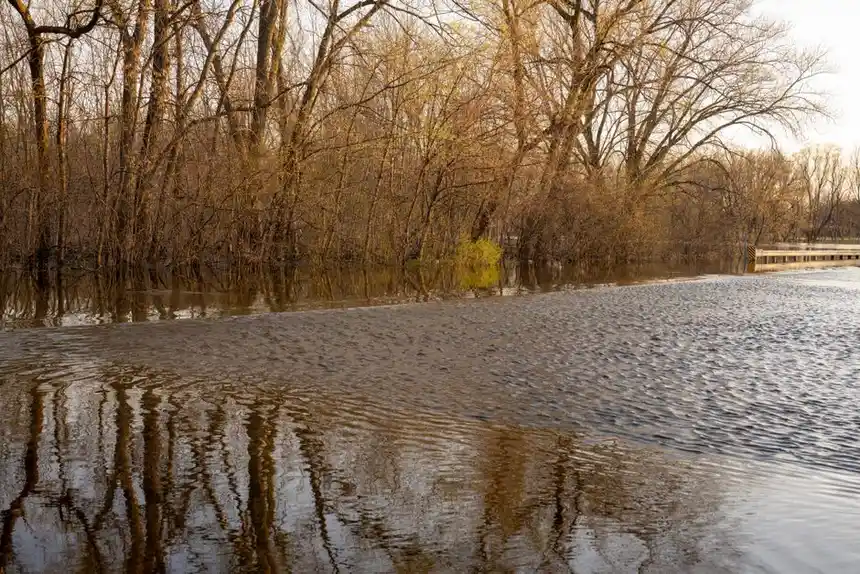
Ohio basements flood because the state's heavy clay soil, high water tables, and freeze-thaw cycles push groundwater against foundation walls faster than most drainage systems can move it away. The fastest way to get the water out is to stop the source if you can, then remove standing water with a submersible pump or wet/dry vacuum, and dry the space within 24 to 48 hours to prevent mold.
We've been pumping out basements across Ohio for years, and the pattern is always the same: water finds the weakest point, and the clock starts ticking the moment it touches your floor. This post walks through why Ohio basements flood, how to get the water out fast, and what you can do to keep it from happening again.
Why Ohio Basements Flood: The Core Causes
Ohio basement flooding causes come down to three things: soil type, water table depth, and the age of your home's drainage system. Most of the state sits on dense clay that absorbs water slowly. During a heavy spring rain, that clay acts like a bowl. Water has nowhere to go but against your foundation.
Older homes in cities like Alliance water damage restoration company areas often have original clay tile drain lines that have collapsed or root-intruded over decades. When those lines fail, water backs up under the slab and finds the path of least resistance - usually a floor drain or a crack in the cove joint.
Newer homes aren't immune. We see just as many flooded basements in 1990s subdivisions where the sump pump was undersized for the lot's grading. A 1/3 horsepower pump that runs fine in dry weather can't keep up with 2 inches of rain in an hour.
Clay soil and poor drainage
Ohio's clay expands when wet and shrinks when dry. That movement opens hairline cracks in foundation walls. Once water gets in, it doesn't need a big opening - a 1/16-inch crack can let in 10 to 15 gallons per hour during a steady rain.
High water tables
Many parts of Ohio have water tables that sit just 3 to 6 feet below grade. After a wet fall or a snowmelt, that table rises. If your basement floor is below the water table, hydrostatic pressure will push water through the floor itself, not just the walls.
Failing sump pumps and backup systems
A sump pump lasts 7 to 10 years on average. If yours is older, or if you've never tested it, you're one power outage away from a flooded basement. We recommend a battery backup system that can run for 6 to 8 hours during an outage - that covers most storm-related power losses in Ohio.
How to Get Water Out of a Flooded Basement in Ohio
How to remove water from basement Ohio homeowners ask about most is a step-by-step process: safety first, then water removal, then drying. Here's the order we follow on every job.
- Shut off the power. If water is above electrical outlets or near the panel, call an electrician before you step in. Never wade into standing water when you're not sure what's energized.
- Find and stop the source. If it's a burst pipe, close the main shutoff. If it's groundwater, you can't stop it - you can only manage it until the rain stops.
- Remove standing water. Use a submersible pump for anything deeper than 2 inches. A wet/dry vacuum handles the rest. Work from the deepest corner toward the drain.
- Pull wet items out. Cardboard boxes, rugs, and furniture wick water into the air. Get them out or elevate them within the first hour.
- Dry the space. Run dehumidifiers and fans continuously. Keep windows closed if the outside humidity is higher than inside.
- Disinfect. Floodwater from outside is contaminated. Use a 1:10 bleach solution or a commercial antimicrobial on concrete and any salvageable framing.
If the water came from a sewage backup, stop at step one and call us. Sewage water removal Ohio requires PPE and hospital-grade disinfectants - it's not a DIY job.
For water that's spread across more than one room, or if you see water wicking up drywall more than 2 inches, you need professional basement water removal Ohio equipment. Our truck-mounted extraction units pull 20 to 30 gallons per minute, which is 10 times faster than a shop vac.
Ohio Basement Flooding Causes by Season
Ohio basement flooding follows a predictable calendar. Knowing what's coming helps you prepare.
Spring: snowmelt and heavy rain
March and April bring the worst flooding in most of Ohio. Frozen ground can't absorb snowmelt, so it runs straight to foundations. Add a 2-inch rain event and you've got water in the basement even if your sump pump is working.
Summer: thunderstorms and power outages
July and August storms knock out power for hours. If your sump pump doesn't have a battery backup, the pit fills and the basement floods. We get more emergency calls during summer outages than any other time.
Fall: leaves and clogged drains
Falling leaves clog gutters and downspouts. Water pours off the roof and lands right next to the foundation. A 2,000-square-foot roof sheds about 1,200 gallons of water in a 1-inch rain - that's 10 bathtubs' worth.
Winter: frozen pipes and ice dams
When temperatures drop below 20°F for days, pipes in exterior walls can freeze and burst. A single 1/2-inch burst pipe releases 10 to 15 gallons per minute. That's a flooded basement in under an hour.
If you're dealing with a burst pipe right now, our Burst Pipe Water Cleanup in Ohio team can be on-site within 60 to 90 minutes to extract water and start drying.
Common Mistakes When Removing Water from an Ohio Basement
The biggest mistake we see is waiting. Homeowners often assume the water will drain on its own or that a few fans will dry it out. It won't. Mold starts growing in 24 to 48 hours, and by the time you smell it, you're looking at a much bigger repair bill.
Other mistakes:
- Using a shop vac for deep water. A wet/dry vac holds 5 to 10 gallons. You'll spend all day emptying it. Rent a submersible pump instead.
- Not removing the baseboards. Drywall wicks water up behind baseboards. If you don't pull them, the wall stays wet and mold grows inside the cavity.
- Running a dehumidifier without air movement. Dehumidifiers pull moisture from the air, but they can't reach inside wall cavities. You need fans to move air across wet surfaces.
- Turning up the heat. Heat speeds mold growth if the space isn't drying fast enough. Keep the basement cool and use dehumidifiers.
- Skipping the moisture check. Concrete looks dry long before it is. A pin-type moisture meter costs $30 and tells you when the floor is actually below 15% moisture content.
If you've already made one of these mistakes, don't panic. We can still save the space. Our water damage inspection Ohio service uses thermal imaging to find hidden moisture behind walls and under floors.
How to Prevent Basement Flooding in Ohio
Prevent basement flooding Ohio strategies start outside. The goal is to move water away from your foundation before it ever reaches the basement.
- Clean gutters twice a year. At minimum, do it in late fall after the leaves drop and in early spring after the last freeze.
- Extend downspouts 6 to 10 feet from the foundation. A $15 plastic extension solves 80% of the problem.
- Grade the soil away from the house. You want a 6-inch drop over the first 10 feet. Add compacted clay soil if you have low spots.
- Test your sump pump every 3 months. Pour a bucket of water into the pit and watch the pump kick on. If it hesitates, replace it.
- Install a battery backup sump pump. This is the single best investment for Ohio homeowners. It runs during power outages when you need it most.
- Seal cracks in the foundation. Use hydraulic cement for active leaks and polyurethane injection for hairline cracks. A professional can do this for $500 to $1,500 depending on the number of cracks.
- Keep floor drains clear. If your basement has a floor drain, pour a gallon of water down it monthly to keep the trap from drying out.
If you've done all this and still get water, the problem is likely the drain tile system under the floor. That's a bigger fix - usually $3,000 to $8,000 for a full perimeter drain replacement. But it's cheaper than repeatedly cleaning up flooded basements.
For homes in low-lying areas like emergency water removal Avon Lake Ohio, we often recommend a sump pump plus a backwater valve on the sewer line. That combination handles both groundwater and sewer backup, which are the two most common sources we see.
When to Call a Professional for Basement Water Removal
Call a professional when the water is deeper than 2 inches, when it covers more than 100 square feet, or when it's been sitting for more than 12 hours. Those three conditions mean DIY equipment won't dry the space fast enough to prevent mold.
You should also call us if the water is contaminated. Sewage backups, stormwater flooding, and any water that's touched electrical outlets require professional gear and disinfectants. We handle sewage backup cleanup services Ohio and storm water extraction Ohio with the same urgency - usually on-site within 90 minutes.
Water Damage Restoration Pros Ohio has been drying out Ohio basements for over a decade. We use commercial-grade extractors, desiccant dehumidifiers, and air movers that pull moisture out of concrete and framing. Most basements are dry to the touch in 3 to 5 days, and we don't leave until our moisture meter reads normal.
If you're not sure whether you need help, call us anyway. We'll ask a few questions over the phone and tell you honestly whether it's a DIY job or a professional one. No pressure, no upsell.
Frequently Asked Questions
Why do basements flood in Ohio?
Ohio basements flood because clay soil drains slowly, water tables are high, and freeze-thaw cycles crack foundations. Spring snowmelt and summer storms overwhelm sump pumps, while winter freezes burst pipes. The result is water against your foundation with nowhere to go but inside.
How do I get water out of my basement in Ohio?
Shut off power, stop the water source if possible, then pump out standing water with a submersible pump. Remove wet items, run dehumidifiers and fans, and disinfect. For water deeper than 2 inches or covering more than 100 square feet, call a professional - DIY gear can't dry fast enough to prevent mold.
How can I prevent basement flooding in Ohio?
Clean gutters twice a year, extend downspouts 6 to 10 feet from the foundation, grade soil away from the house, and test your sump pump every 3 months. Add a battery backup pump for power outages. Seal foundation cracks with hydraulic cement or polyurethane injection.
Who do I call for basement water removal in Ohio?
Call Water Damage Restoration Pros Ohio at (123) 456-7890. We handle emergency basement water removal, structural drying, and mold prevention. Our team is on-site within 60 to 90 minutes for most Ohio locations, 24 hours a day.
Get Help with Water Damage Restoration in Ohio
If your basement is flooded right now, every hour counts. We'll pump out the water, dry the space, and treat for mold before it becomes a bigger problem. Call Water Damage Restoration Pros Ohio at (123) 456-7890 - we answer 24/7 and can be at your door in about an hour.